

Digital Defense Computing and communications now go hand in hand. In contemporary operations, the course of a mission is no longer determined by the deployed platform alone, but by the ability to exchange data securely, quickly, and continuously. Information has become a tactical resource, and its transmission one of the most vulnerable points in modern mission execution. As military workflows become increasingly digital, operational and information-technology domains converge. Sensing, reconnaissance, navigation, and logistics all depend on stable data flows. Any disruption or outage can delay or interrupt decision cycles. Resilience is therefore a core requirement for every communications infrastructure in the field.
Communications as Critical Infrastructure
What used to be a set of linear radio links has evolved into a complex mesh of radio, cellular, and IP-based channels. This network is distributed, highly dynamic, and continually exposed to threats, whether through electronic jamming, cyber operations, or physical disruption. The classic notion of redundancy is often no longer sufficient. Modern defense networks therefore rely on multi-layered communications architectures that can be monitored and reconfigured on the fly. Multi-link strategies can combine 5G, LTE, Wi-Fi, and satellite channels into a more resilient communications fabric. Data is no longer routed over a single path. It can be distributed and prioritized across parallel routes to compensate for outages as quickly as possible. Concepts like these form the basis of what is referred to internationally as networked warfare: the ability to exchange information largely in real time between the actors involved, within the limits imposed by location, platform, and available bandwidth in a given mission. Connected systems extending into the Internet of Military Things (IoMT) place particular demands on the availability and protection of data paths.
Resilience as System Architecture
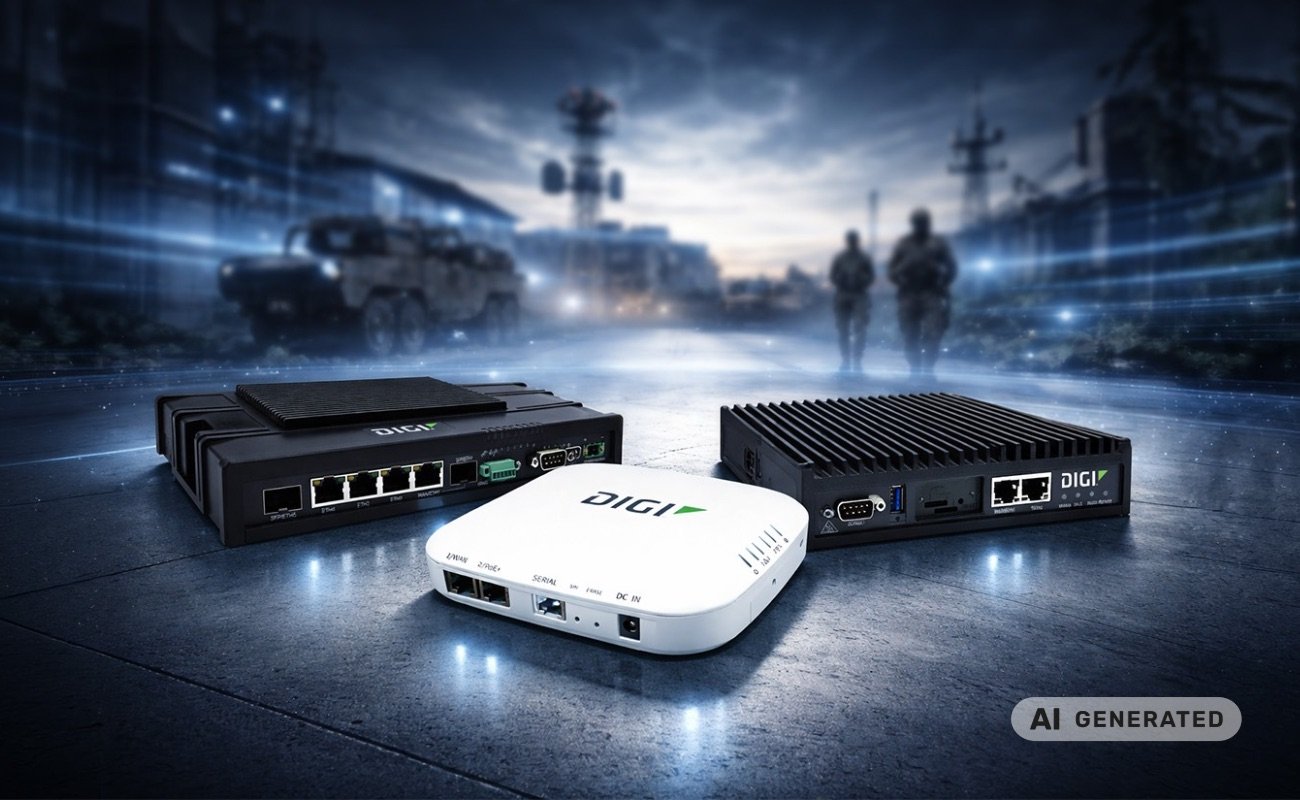
Trust and integrity as technical constants: as the number of connected systems grows, so does the attack surface. Communications security can therefore not be addressed at the software layer alone. It should be built into the device architecture itself. Technologies such as Digi TrustFence® address this requirement through a combination of Secure Boot, device authentication, access control, and encryption. This allows security mechanisms for device identity, system integrity and access control to be implemented at the device level. Device-level security functions are one building block among several. Their value only materializes in combination with network architecture and organizational measures.
In this context, resilience means more than technical redundancy. It describes a system's ability to keep operating after a disruption, ideally without any noticeable loss of function. That requires communications, compute, and security to be organized in a distributed fashion. The interplay of IoT gateways, edge servers, and routers can create semi-autonomous network structures that establish alternate routes, process data locally, and forward only what is strictly necessary to higher-level systems. This approach reduces dependencies, shortens reaction times, and improves the survivability of communications in the area of operations. In the military domain, this form of self-organization is increasingly a prerequisite for interoperable systems, both within national structures and in multinational formations.
Outlook: The Tactical Network as a Domain in Its Own Right
Communication at the tactical edge is increasingly evolving from a supporting infrastructure into a strategic factor in its own right. It is no longer merely a means to an end, but rather an essential prerequisite for networked operational architectures. The challenge lies in translating technological diversity, from sensors and vehicles to satellite links, into a coherent, resilient network architecture. That architecture should keep data flowing even when individual elements are compromised or overloaded. Secure communications thus become an essential precondition for command capability, autonomy, and data sovereignty. Resilience is not an added feature but a prerequisite for the ability to act in an increasingly connected operational environment.
In this environment, BRESSNER acts as a hardware and integration partner, not as a developer of military networks or their associated software logic. The focus is on rugged, long-term-available hardware and on integrating suitable components into existing architectures.
Share this article


Further posts

Nov 4, 2026, 9:00:02 AM How resilient, multi-layered communications architectures secure data flows at the tactical edge and keep Defense Computing missions operational.
Oct 27, 2026, 9:00:02 AM How rugged hardware, Secure Boot, firmware integrity, and lifecycle management shape cyber defense for mission-critical systems at the tactical edge.
Oct 21, 2026, 9:00:01 AM How rugged systems behave under sustained load, thermal stress, and unstable links, and what that means for Defense Computing architectures in the field.
Oct 14, 2026, 9:00:00 AM How Rugged Computing and Tactical Edge architectures turn distributed sensor data into a consistent, mission-ready situational picture in Defense Computing
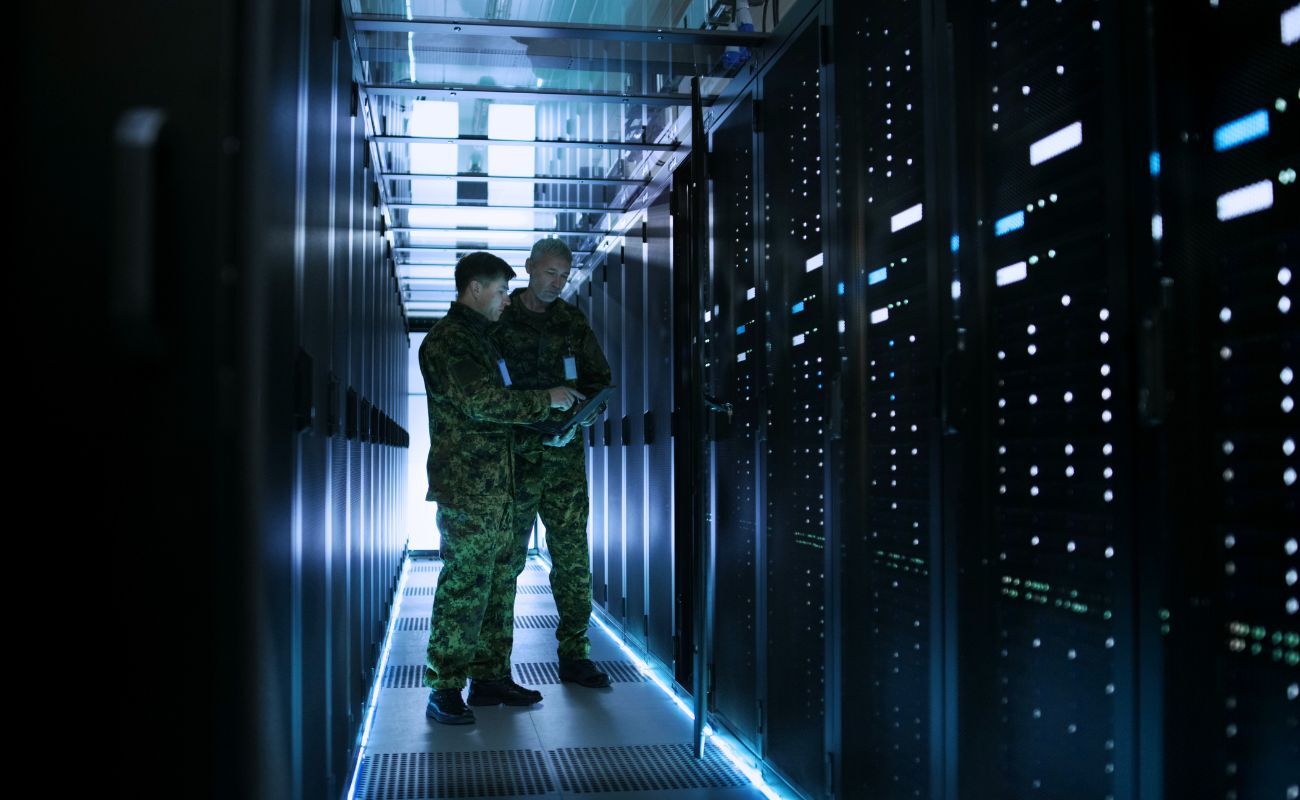
Oct 7, 2026, 9:00:01 AM Why rugged computing is crucial for defence applications: validation, thermal management and modular systems in mission-critical operations.

Sep 30, 2026, 9:00:01 AM Edge AI for faster situational assessment: How sensor fusion and human-in-the-loop decision support are reducing military response times.
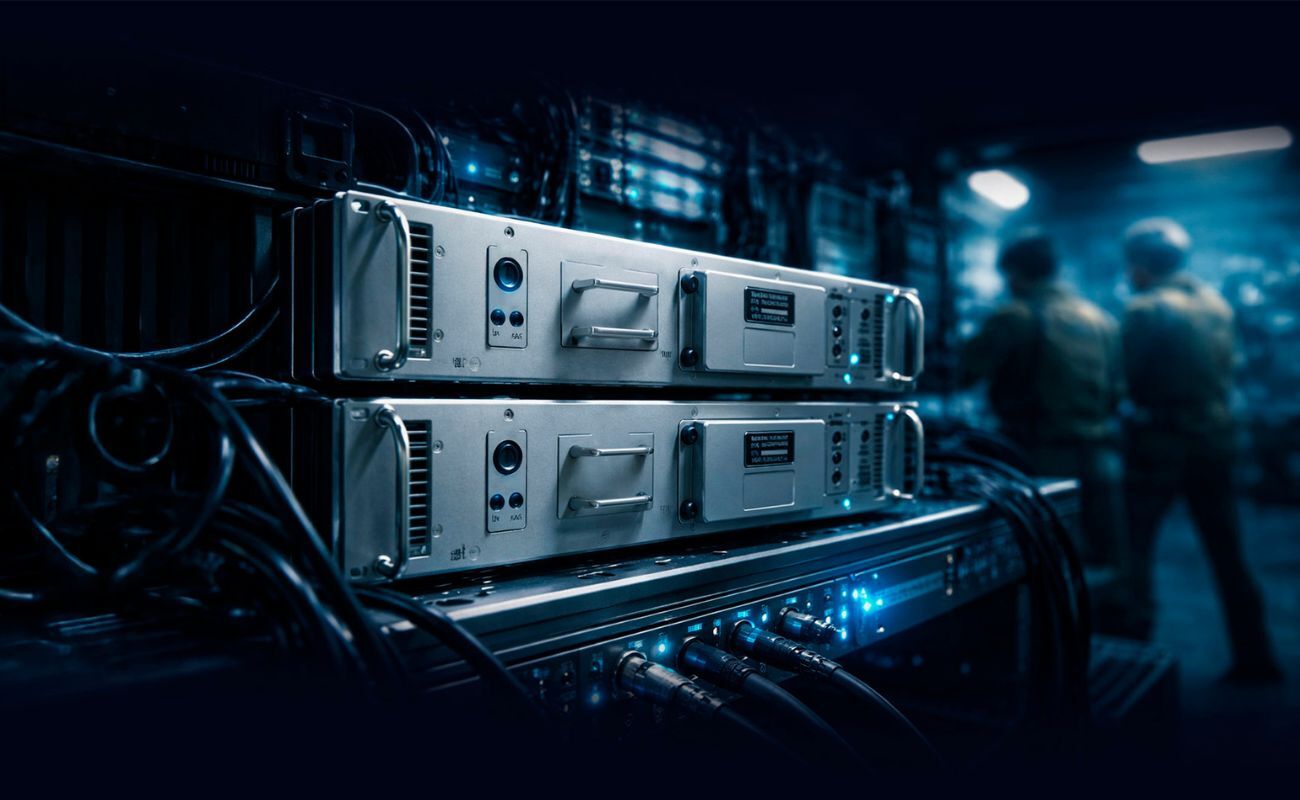
Jun 9, 2026, 9:00:00 AM Industrial hardware for harsh environments: why rugged design, thermal stability, serviceability, and lifecycle matter. Includes the BRESSNER Buyer’s Guide.

Feb 26, 2026, 9:00:00 AM Discover how 5G and Wi-Fi 7 are revolutionizing the reliability and security of industrial networks and setting new standards for digitalization.

Feb 10, 2026, 9:00:00 AM From the sensor to the cloud: How gateways and edge systems optimize data flows in industry—securely, scalably, and efficiently with BRESSNER.

Feb 3, 2026, 9:00:00 AM Learn how Panel PCs are revolutionizing hospital processes and improving critical medical decisions through edge computing.

Jan 29, 2026, 9:00:00 AM Predictive maintenance with embedded AI is revolutionizing maintenance through local data analysis, shortening response times and reducing costs.

Want to stay up to date?
- Then sign up for our newsletter!