

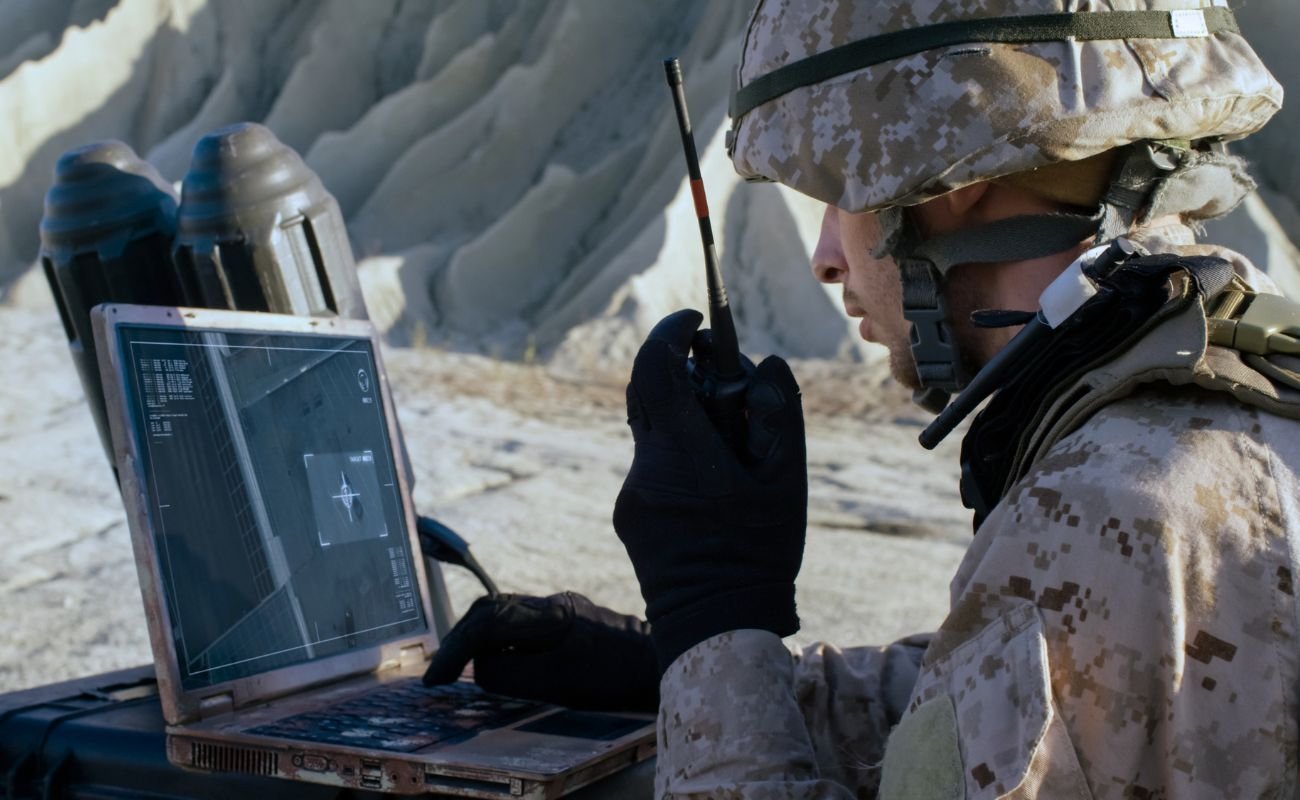
The display is bright enough to render every detail legible even in direct sunlight. Multiple video feeds run in parallel, alongside map overlays, position data, vehicle status reports, and drone telemetry. Everything is visible. And yet, in this moment, what fills the operations space is not clarity but tension.
Because a Broad Information Base Is Not the Same as Understanding
Modern operational environments generate volumes of data that would have been almost inconceivable only a few years ago. Sensors cover spaces that used to be inaccessible, cameras deliver high-resolution imagery in real time, and radio and network systems register even the smallest changes in the electromagnetic environment. From a purely technical standpoint, something resembling a 360-degree view of the engagement area does emerge.
Operationally, However, This Is Where the Real Challenge Begins
A complete picture requires that information be not only available, but also mutually consistent. This is where many information architectures fall short. Data does not arrive simultaneously. It comes from different sources, uses different time references, and travels across networks whose stability can never be guaranteed. The result is often not a coherent situational awareness picture, but a superposition of snapshots that only appear to belong together. Anyone forced to make decisions under these conditions quickly recognizes how narrow the line is between information and information overload.
The Quiet Complexity Behind the Term "Awareness"
"360-degree awareness" sounds like completeness. It suggests technical control over a complex environment. In practice, the term describes a goal rather than a state. Comprehensive capture is only the precondition; the real work lies in consolidation. In dynamic scenarios, constellations shift within seconds. An object that appears in a video frame may have moved well before its position data is synchronized. A signal flagged as unusual in the RF domain loses its relevance if it is not immediately placed in the wider context. Minor timing offsets can turn individually correct data points into an inconsistent overall picture. Sensor fusion is therefore frequently underestimated. It is not a downstream compute operation but the core of any awareness architecture, and it only works reliably when processing, synchronization, and prioritization happen as early in the chain as possible.
Why the Edge Is Becoming a Strategic Point
In theory, data can be aggregated centrally. In practice, hard technical boundaries apply: latencies accumulate, bandwidth fluctuates, and communication links can be unstable, degraded, or deliberately contested. The further analytical processes sit from the point where the data originates, the greater the dependency on stable infrastructure becomes. For that reason, and out of operational necessity, the focus is shifting increasingly toward the Tactical Edge. When sensor data is pre-processed where it is generated — on tactical edge AI computers close to the sensor layer — system behavior changes noticeably. Information is no longer forwarded raw, but in structured form. Movements are classified, anomalies flagged, patterns identified before they ever reach a higher-level situational picture. This delivers speed and robustness in equal measure. Depending on the system architecture, a locally consistent partial picture can be maintained even when the uplink is lost, keeping forces capable of acting. Further aspects are covered in our article on ultra-rugged computer architectures for tactical edge computing environments. Architectures of this kind, however, demand more than raw compute. They require platforms that remain stable under continuous thermal load, absorb mechanical stress, and rely on components that stay reliably available over years of service. Systems that BRESSNER supplies, integrates, and adapts to customer requirements as a solution provider and system integrator for safety- and mission-critical environments are built on exactly this premise: performance is necessary, but it must not come at the expense of stability and lifecycle assurance.
Resilience Is More Than Redundancy
Resilience in this context is often equated with duplicated links or additional backups. A genuinely dependable situational picture, however, rests on considerably more factors. What happens during an abrupt power loss? Do write operations remain consistent? Is storage laid out redundantly so that locally derived insights are not lost? Is a stable, buffered power supply in place? Can systems be monitored and recovered remotely through out-of-band management? And is end-to-end lifecycle management assured so that hardware, spare parts, and configurations remain available across the deployment period? These questions look purely technical, but operationally they are decisive. Trust in a situational picture does not come from level of detail alone; it comes from reliability. A system whose results cannot be traced, or whose underlying data is in doubt, will be ignored when it counts, even if its arithmetic is correct.
The Decisive Phase: Handing Over Insight
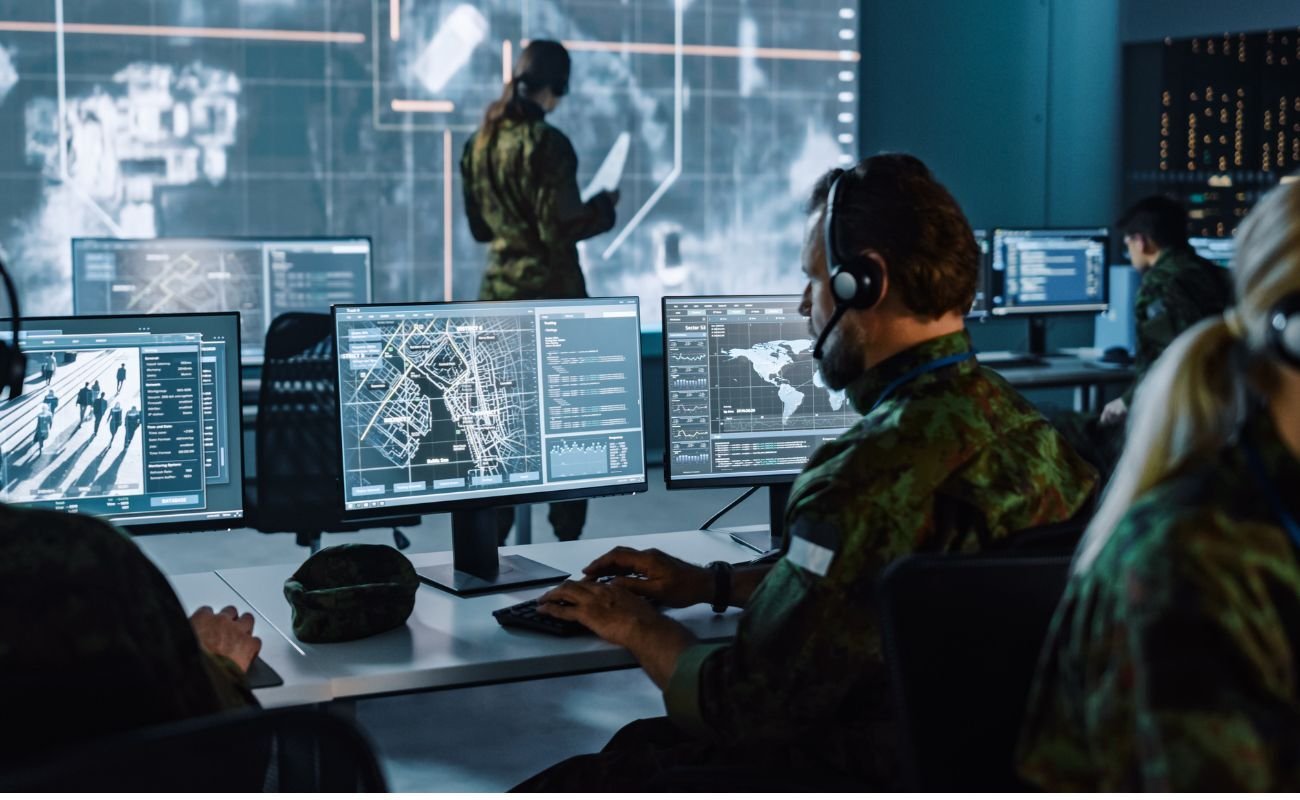
Awareness does not end with local analysis. The moment insights are passed on is at least as sensitive. Information must be prioritized, condensed, and presented in a form that remains intelligible under time pressure. A 360-degree picture does not mean displaying everything at once. It means making what matters visible without stripping away context. Between technical capture and strategic decision lies a narrow transition in which clarity outweighs completeness. In the end, the value of such an architecture is not measured by the number of connected sensors or the resolution of a video stream. What matters is whether distributed data sources produce a consistent, dependable overall picture that holds up under adverse conditions. Being able to see more is a technical achievement. Understanding faster what is relevant is a strategic one. And that is where genuine 360-degree awareness begins.
As a solution and project partner, BRESSNER supports government agencies, system houses, and industrial customers in translating these requirements into a viable system architecture. The starting point is not the hardware but the operational scenario: Which data sources and sensors are involved? What compute capacity is required at the edge? Which interfaces and protocols must be supported? Under what environmental conditions will the system operate? What SWaP (Size, Weight, and Power) constraints apply? And what lifecycle and certification requirements must be met? The concrete configuration is derived from those answers. From the selection of suitable rugged platforms through integration and customization to support across the full lifecycle.
Share this article


Further posts

Oct 14, 2026, 9:00:00 AM How Rugged Computing and Tactical Edge architectures turn distributed sensor data into a consistent, mission-ready situational picture in Defense Computing
Oct 7, 2026, 9:00:01 AM Why rugged computing is crucial for defence applications: validation, thermal management and modular systems in mission-critical operations.
Sep 30, 2026, 9:00:01 AM Edge AI for faster situational assessment: How sensor fusion and human-in-the-loop decision support are reducing military response times.
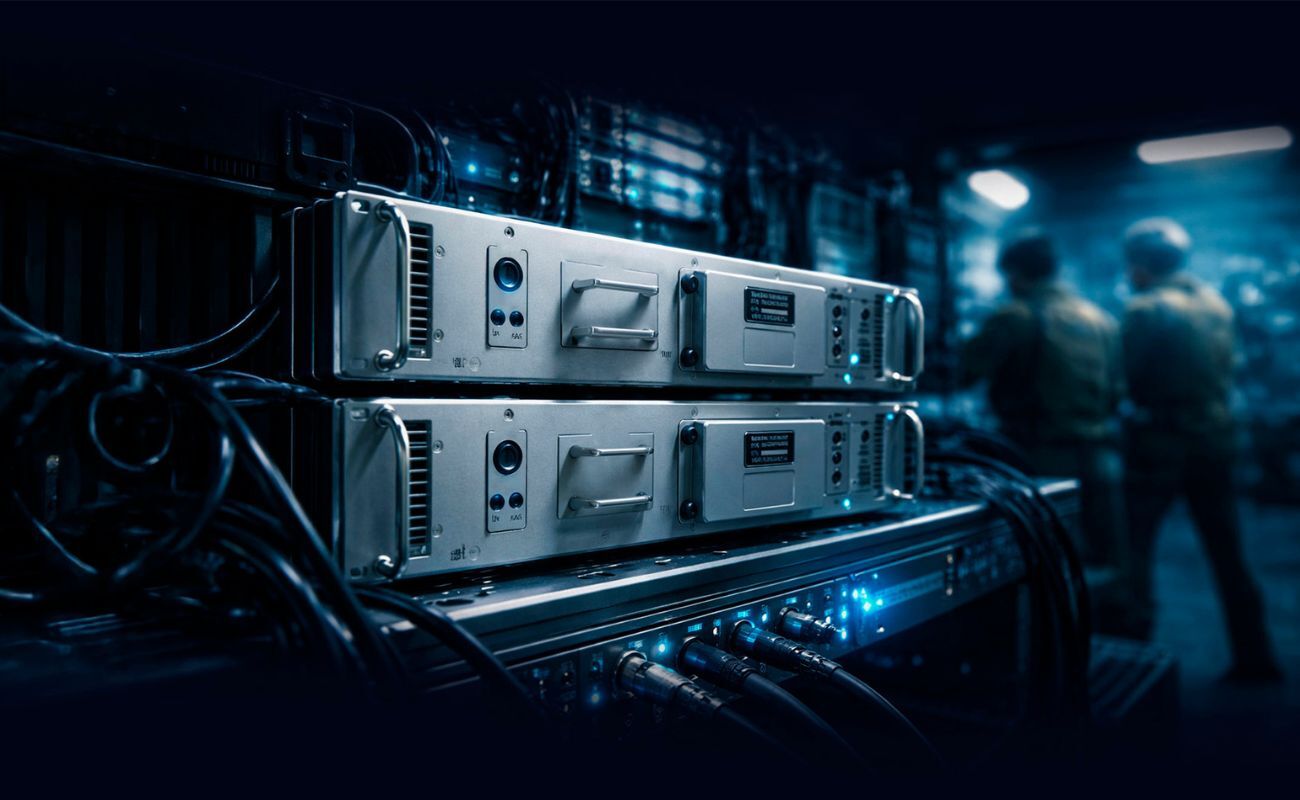
Jun 9, 2026, 9:00:00 AM Industrial hardware for harsh environments: why rugged design, thermal stability, serviceability, and lifecycle matter. Includes the BRESSNER Buyer’s Guide.

Feb 26, 2026, 9:00:00 AM Discover how 5G and Wi-Fi 7 are revolutionizing the reliability and security of industrial networks and setting new standards for digitalization.

Feb 10, 2026, 9:00:00 AM From the sensor to the cloud: How gateways and edge systems optimize data flows in industry—securely, scalably, and efficiently with BRESSNER.

Feb 3, 2026, 9:00:00 AM Learn how Panel PCs are revolutionizing hospital processes and improving critical medical decisions through edge computing.

Jan 29, 2026, 9:00:00 AM Predictive maintenance with embedded AI is revolutionizing maintenance through local data analysis, shortening response times and reducing costs.
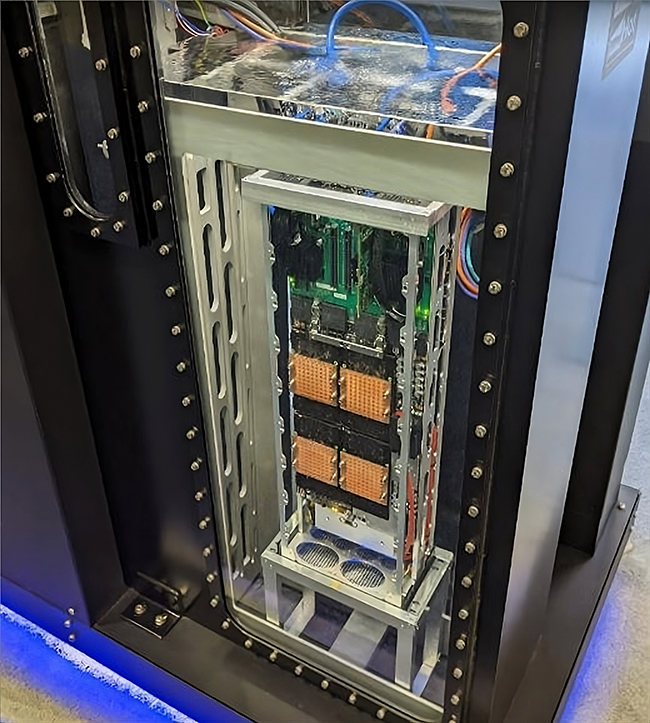
Jan 22, 2026, 9:00:01 AM Ultra-rugged edge computers are essential for military applications, offering high computing power and resistance to extreme environments.
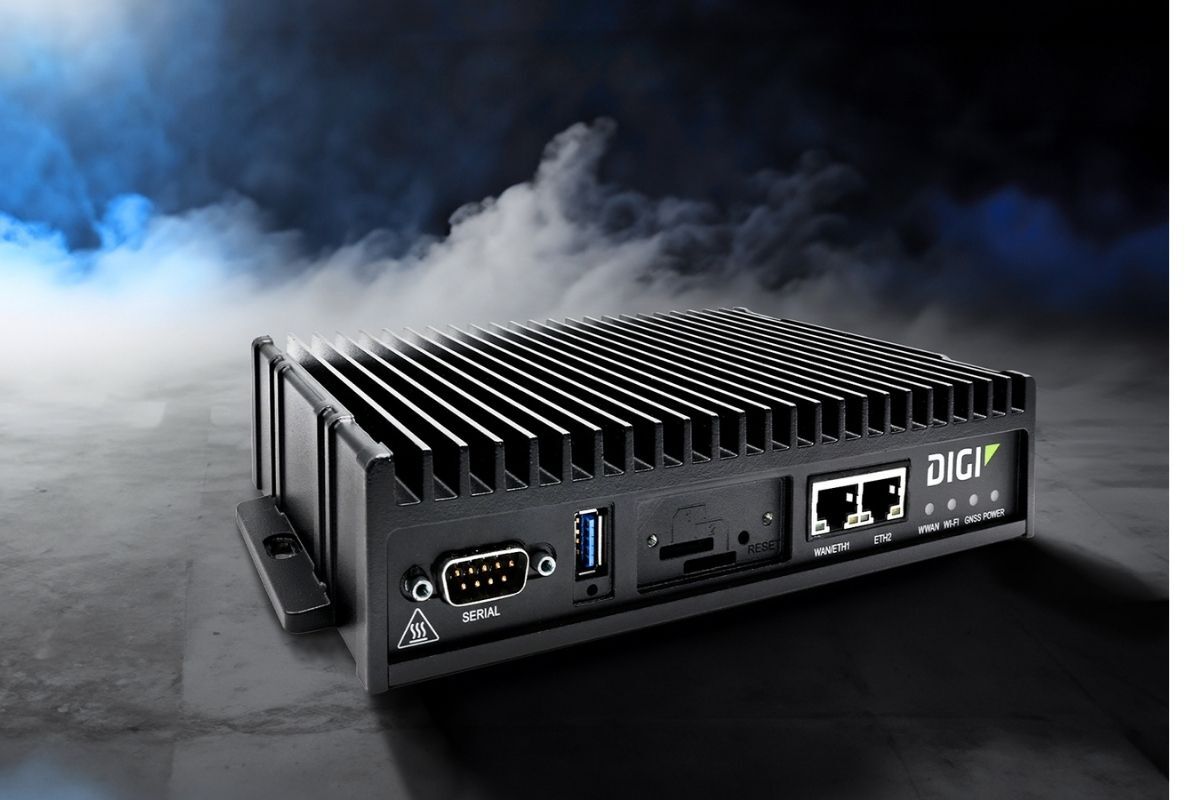
Jan 15, 2026, 9:00:01 AM Learn how 5G mobile routers are revolutionizing security in industrial applications and ensuring stable connectivity.

Jan 9, 2026, 2:14:24 PM HIPER Global acquires BRESSNER Technology from One Stop Systems to leverage synergies and strengthen its position in the European market.

Want to stay up to date?
- Then sign up for our newsletter!