
Military operations rarely follow a routine. Temperature, vibration, dust, and moisture are variable constants that put every electronic component to the test. In environments where systems are under constant strain, resilient Rugged Computing becomes the foundation of digital defense capability. As the battlefield continues to digitize, the number of data-processing components is rising sharply. Sensors, vehicles, UAVs, and communication networks generate a dense mesh of information and place correspondingly heavy demands on hardware. Raw performance alone is no longer enough: systems must remain stable and available under the specific conditions of each mission.
Reliability Under Extreme Conditions
For military applications, rugged systems are typically qualified against test methods from the MIL-STD-810 series, the current revision is MIL-STD-810H, while many fielded platforms are still certified to MIL-STD-810G. Which test methods and ingress protection ratings (up to IP69K) actually apply depends on the specific mission profile. Blanket claims that a system meets "all military standards" do not hold up under technical scrutiny. Beyond mechanical protection, continuous performance is the decisive factor. In a military context, a reboot is not an option. Edge servers and AI-enabled systems must operate without interruption inside a vehicle, in a mobile command post, or in unprotected outdoor installations. Today's platforms are therefore not just engineered but validated: tested for temperature and thermal cycling, vibration and shock, humidity, dust and water ingress, as well as EMC/EMI. BRESSNER supports projects in selecting suitable platforms and accompanies testing and certification along the actual requirements profile.
Thermal Design as a Key Factor
As AI workloads move into the tactical environment, thermal load rises significantly. Under sustained load, CPUs and GPUs generate temperatures that push classic actively ventilated concepts to their limits. In mobile and tactical use cases, the focus therefore shifts to fanless and passively cooled designs, conduction cooling, and targeted heat dissipation through housing and chassis — approaches that avoid moving parts and minimize the ingress of dust and moisture. Only in Rugged HPC and server contexts, such as stationary or vehicle-mounted data centers, do liquid cooling concepts like direct-to-chip liquid cooling come into play. A sound thermal design ensures hardware longevity and consistent system stability, a factor that becomes especially relevant with AI-assisted sensor fusion and real-time analytics. In the field, heat cannot be treated as a variable.
Flexible Systems for Changing Mission Requirements
Military IT architectures today must be not only rugged but also adaptable. Modular platforms that can be scaled in performance, form factor, and interfaces provide the flexibility needed for shifting mission requirements. A system that serves as a compute node inside a vehicle can, with GPU expansions or additional memory channels, also operate as a mobile AI platform. Hot-swap storage, PCIe expansion boards, and variable power supply configurations allow hardware to be tailored to deployment site, power availability, and data volume without altering the core architecture. This reduces logistical overhead and improves operational readiness across the entire lifecycle. As a project and solution partner, BRESSNER supports this path from requirements analysis through platform selection to customization and test/certification support. An overview of the portfolio is available on the Defense Computing landing page.
Validated Systems for Day-to-Day Operations
Practical deployments show how decisive these characteristics are. In reconnaissance units, short-depth servers are used to process sensor data directly on site. In UAV ground stations, GPU-accelerated tactical edge AI computers support real-time analysis of aerial imagery. And in tactical networks, rugged AI systems handle local data processing so that decisions remain possible even when communications are degraded. A common requirement runs through all of these examples: availability and reliability, regardless of environment. The systems must work where they are needed: not just in the lab, but in the field.
Rugged Computing as the Foundation of Digital Defense
Military IT is moving steadily toward decentralized, autonomous systems. Mission readiness does not come from a single feature, it emerges from the interplay of rugged design, available compute power, sound thermal management, robust validation, and consistent adaptability to the mission profile. In this environment, BRESSNER positions itself as a Defense Computing partner, combining suitable platforms from the Defense Computing shop overview with project-specific customization and certification support. True mission readiness means that technology proves itself not under ideal conditions, but when it is put to the test.
Share this article


Further posts
Oct 7, 2026, 9:00:01 AM Why rugged computing is crucial for defence applications: validation, thermal management and modular systems in mission-critical operations.

Sep 30, 2026, 9:00:01 AM Edge AI for faster situational assessment: How sensor fusion and human-in-the-loop decision support are reducing military response times.
Jun 9, 2026, 9:00:00 AM Industrial hardware for harsh environments: why rugged design, thermal stability, serviceability, and lifecycle matter. Includes the BRESSNER Buyer’s Guide.

Feb 26, 2026, 9:00:00 AM Discover how 5G and Wi-Fi 7 are revolutionizing the reliability and security of industrial networks and setting new standards for digitalization.

Feb 10, 2026, 9:00:00 AM From the sensor to the cloud: How gateways and edge systems optimize data flows in industry—securely, scalably, and efficiently with BRESSNER.

Feb 3, 2026, 9:00:00 AM Learn how Panel PCs are revolutionizing hospital processes and improving critical medical decisions through edge computing.

Jan 29, 2026, 9:00:00 AM Predictive maintenance with embedded AI is revolutionizing maintenance through local data analysis, shortening response times and reducing costs.
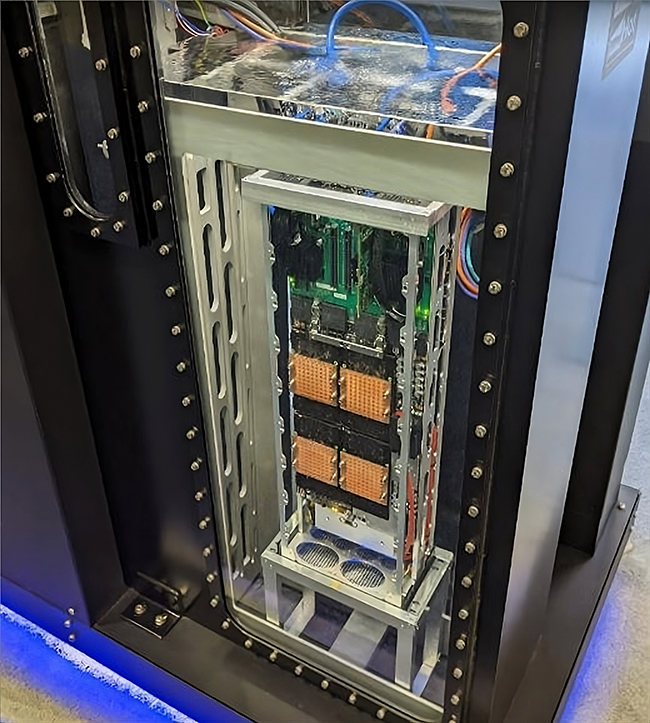
Jan 22, 2026, 9:00:01 AM Ultra-rugged edge computers are essential for military applications, offering high computing power and resistance to extreme environments.
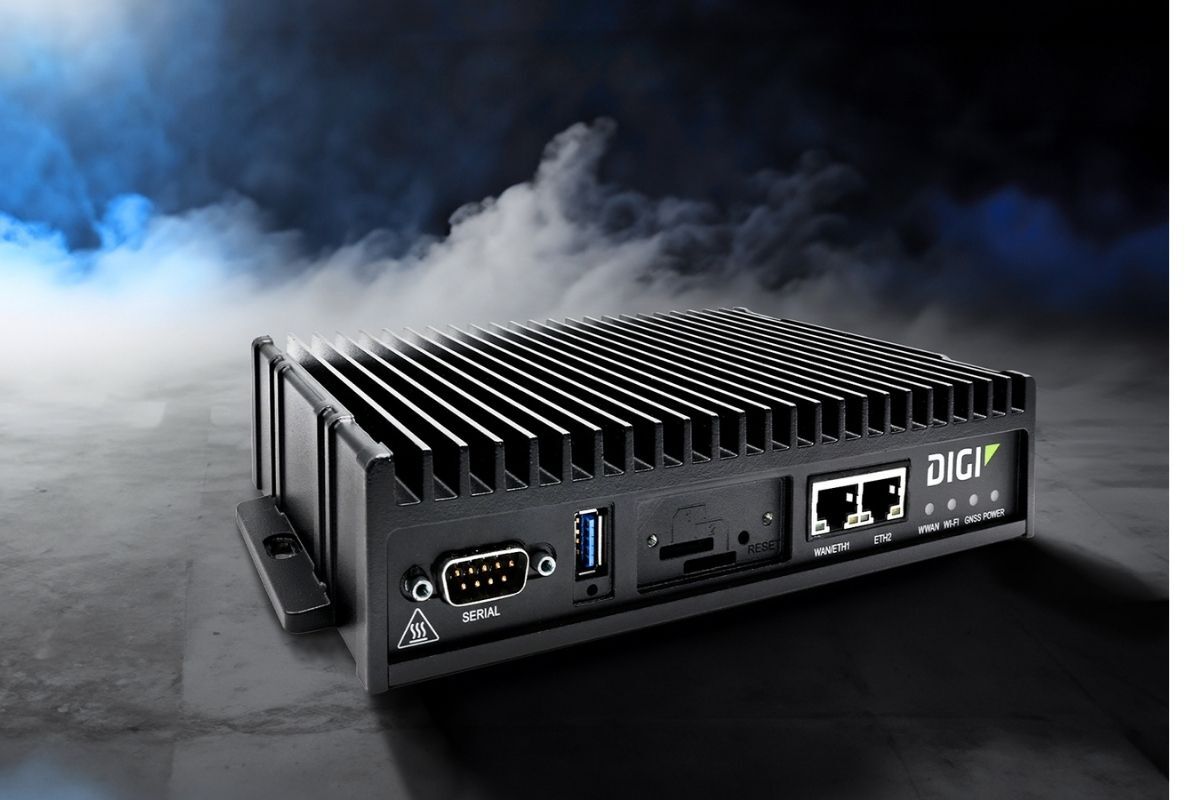
Jan 15, 2026, 9:00:01 AM Learn how 5G mobile routers are revolutionizing security in industrial applications and ensuring stable connectivity.

Jan 9, 2026, 2:14:24 PM HIPER Global acquires BRESSNER Technology from One Stop Systems to leverage synergies and strengthen its position in the European market.
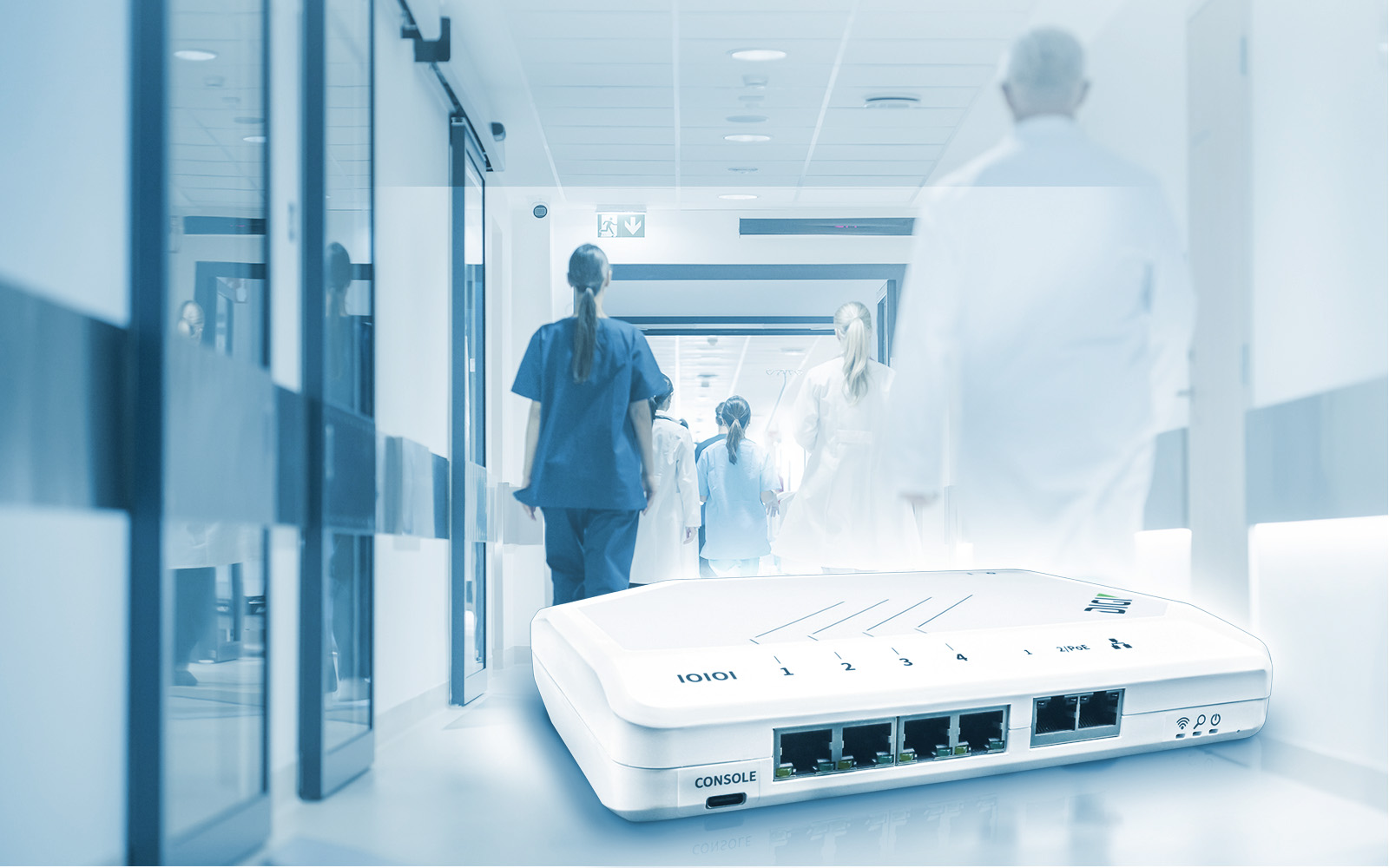
Nov 6, 2025, 9:00:00 AM Learn why IEC 60601 compliance is crucial for networked medical technology and how the Digi Connect® EZ WS meets this standard.

Want to stay up to date?
- Then sign up for our newsletter!